

















The Hidden Costs of Owning an Electric Car That No Dealer Tells You About
Walking into a car dealership in 2026 feels like stepping into a high-tech future. The salesperson likely dazzled you with promises of electric vehicle savings, tax credits, and the blissful end of $5-a-gallon gasoline. It’s a compelling pitch, and for many, the switch is a brilliant financial move. However, as the auto industry matures, a clearer picture is emerging: the total EV ownership costs involve far more than just “plug and play.”
Understanding these EV hidden expenses is critical before you sign on the dotted line. While your daily commute might become cheaper, several “invisible” financial hurdles—from specialized EV maintenance to shifting tax landscapes—can significantly impact your long-term budget. In this guide, we’re peeling back the showroom curtain to reveal the real costs of going electric that no dealer mentions.
1. The Charging Infrastructure “Entry Fee”
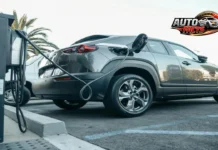
The biggest myth in the EV world is that you can simply plug your car into a standard wall outlet and be ready to go. While “Level 1” charging exists, it adds only about 3-5 miles of range per hour. For anyone driving more than 30 miles a day, a Level 2 home charging station is a non-negotiable requirement.
The electric car costs here come in two parts. First is the hardware, which usually runs between $400 and $800. The second—and more volatile—cost is installation. Depending on your home’s age, you may need a panel upgrade to handle the 50-amp load. Recent data shows that while a simple install averages $800, complex setups involving new sub-panels or trenching can skyrocket to $3,000 or more. Don’t forget that many federal installation tax credits are set to scale back by mid-2026, making this “entry fee” even heavier.
2. Why EVs are “Tire Shredders”
One of the most frequent surprises in EV maintenance is the tire bill. Electric vehicles are significantly heavier than gas cars due to their massive battery packs. Combine that weight with the “instant torque” of an electric motor, and you have a recipe for rapid rubber wear.
- Longevity: EV tires typically last 20% to 30% less time than those on an internal combustion engine (ICE) vehicle.
- Specialized Specs: You can’t just slap on the cheapest tires. EVs require “HL” (High Load) rated tires with low-rolling resistance to maintain range and specialized foam linings to keep the cabin quiet.
- Price Tag: These specialized tires often cost 25% more than standard versions, meaning you’ll be paying more, more often.
3. The EV Insurance Premium “Shock”
You might think that because EVs are packed with safety tech, EV insurance would be cheaper. Unfortunately, it’s quite the opposite. Currently, insuring an electric vehicle costs roughly 15% to 49% more than a gas equivalent. The logic is simple: they are more expensive to repair.
Because the battery is integrated into the chassis, even a moderate side-impact collision can compromise the battery’s structural integrity. When a battery is damaged, it is rarely repaired; it is replaced. This high “total loss” risk forces insurance companies to hike premiums. In 2026, the average annual premium for a luxury EV can hover around $4,000, a significant jump from the $2,700 average for gas-powered sedans.
4. Battery Degradation and the “Silent” Depreciator
Modern batteries are engineering marvels, but they are still chemical devices that degrade. While most manufacturers offer an 8-year/100,000-mile warranty, the “health” of your battery directly dictates your car’s resale value. In the used market, a car with 90% battery health is worth significantly more than one with 82%.
This creates a new kind of EV ownership cost: range anxiety for the *next* owner. As your range slowly drops by 1-2% per year, your asset’s value can fall faster than an equivalent gas car. By year five, the gap in resale value between a top-tier EV and a well-maintained hybrid can be thousands of dollars.
5. The “Public Charging” Premium
If you can’t charge at home, the “fuel” savings of an EV can vanish instantly. The days of free public charging are largely over. Fast-charging networks have moved to for-profit models, with rates in 2026 often exceeding $0.50 per kWh.
At these rates, charging an EV at a public station can actually be *more* expensive per mile than filling up a high-efficiency hybrid. To see true electric vehicle savings, you must rely on off-peak home electricity rates. If you live in an apartment without a dedicated charger, you might find yourself paying “gasoline prices” for electricity while also losing 40 minutes of your day at a charging hub.
6. Shifting Tax Landscapes: The Road User Fee
For years, EV owners enjoyed “free” use of the roads, as they didn’t pay the gas taxes that fund highway maintenance. Governments have caught on. In 2026, many states and provinces have introduced specialized EV registration fees to recoup these losses.
7. High-Tech Component Failures
EVs have fewer moving parts—no oil changes, no timing belts, no spark plugs. But the parts they *do* have are incredibly complex. Unexpected car expenses often stem from the thermal management systems (which keep the battery at the right temperature) or the sophisticated infotainment screens that control every aspect of the vehicle.
If a cooling pump for the battery fails out of warranty, you aren’t looking at a $100 fix; you’re looking at a specialized labor bill that can easily reach $1,500. These aren’t repairs your local neighborhood mechanic can handle, forcing you back to the dealership and their higher labor rates.
8. Software Locks and Subscriptions
Welcome to the era of “Hardware as a Service.” A growing trend in electric car costs is the subscription model. Some manufacturers now build features like heated seats, faster acceleration, or advanced navigation into every car, but they require a monthly fee to “unlock” them. This turns a one-time purchase into a recurring EV hidden expense that can add $20-$50 to your monthly operating costs.