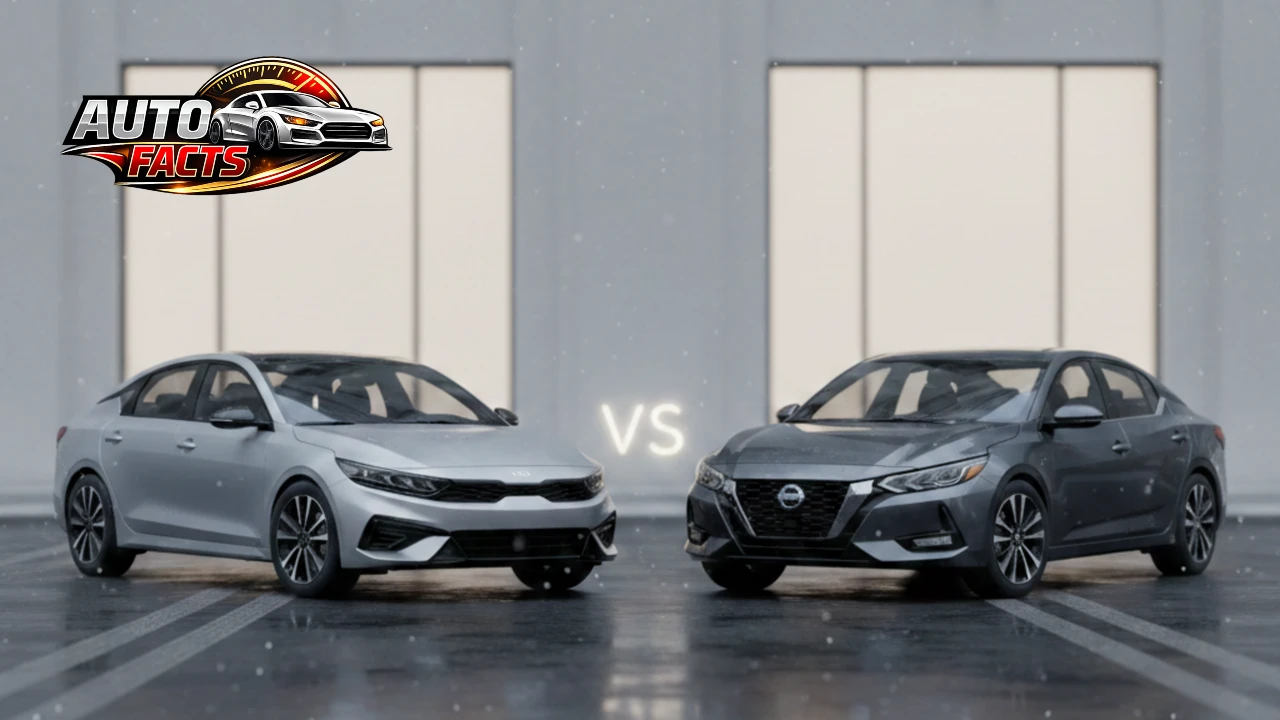
Kia Forte vs Nissan Sentra | Full Comparison 2026
The compact sedan market is witnessing a renaissance in 2026. As crossover prices continue to climb, savvy buyers are returning to the classic four-door for its superior fuel efficiency and urban maneuverability. In this space, two heavyweights stand out: the Kia Forte (newly rebranded and redesigned as the Kia K4) and the Nissan Sentra.
Comparing these two vehicles is essential for 2026 buyers because they represent the “sweet spot” of the automotive market—offering premium technology and advanced safety features at a price point that remains accessible. Whether you prioritize the sporty edge of the new K4 or the refined, comfortable reputation of the Sentra, this full comparison will help you navigate your next purchase with confidence.
Overview of Each Vehicle
The Kia Forte (Kia K4)
For 2026, Kia has officially retired the “Forte” name in favor of the Kia K4. This transition follows the success of the K5 and K3 globally, bringing a bold “Opposites United” design language to the compact segment. The K4 features a unique fastback silhouette and a widened stance that gives it more presence on the road than any Forte before it. Known for its industry-leading warranty and aggressive tech integration, the K4 is aimed at the modern, digital-first driver.
The Nissan Sentra
The 2026 Nissan Sentra continues to build on its reputation as the “sophisticated” choice in the budget segment. Following a major refresh that sharpened its exterior lines and upgraded its interior materials, the Sentra feels less like an entry-level car and more like a scaled-down luxury sedan. Nissan has focused heavily on ride quality and seat comfort, making the Sentra a favorite for long-distance commuters and small families who value a tranquil cabin experience.
Price & Trim Comparison
In 2026, both Kia and Nissan have managed to keep starting prices competitive despite rising manufacturing costs. Kia offers a slightly broader range of trims, catering to both budget-conscious shoppers and those looking for a “warm” performance sedan.
| Feature | 2026 Kia K4 (Forte) | 2026 Nissan Sentra |
|---|---|---|
| Starting MSRP | ~$22,300 | ~$22,600 |
| Top Trim MSRP | ~$29,900 (GT-Line Turbo) | ~$28,200 (SL) |
| Number of Trims | 5 (LX, LXS, EX, GT-Line, GT-Turbo) | 4 (S, SV, SR, SL) |
| Value Pick | LXS Sedan | SV with Premium Package |
Value-for-Money Analysis: The Nissan Sentra offers more standard safety equipment on its base “S” trim, which may appeal to those looking for the absolute lowest entry price without sacrificing protection. However, the Kia K4’s 10-year/100,000-mile powertrain warranty remains the ultimate value proposition for long-term owners, significantly lowering the risk of expensive repairs down the road.
Engine & Performance
Performance in 2026 is no longer just about horsepower; it’s about the delivery of power and efficiency. Here is how the two sedans stack up mechanically:
- Kia K4 Engine Options: The K4 offers a standard 2.0L 4-cylinder (147 hp) paired with an Intelligent Variable Transmission (IVT). However, the GT-Line Turbo trim steps it up with a 1.6L Turbocharged engine producing 190 horsepower and an 8-speed automatic—a rarity in this segment.
- Nissan Sentra Engine: The Sentra keeps it simple with a single 2.0L 4-cylinder engine across all trims, producing 149 horsepower. It uses Nissan’s latest Xtronic CVT, which has been recalibrated for 2026 to reduce the “rubber-band” feel common in older CVTs.
Driving Feel: The Nissan Sentra excels in ride smoothness thanks to its independent multi-link rear suspension, which handles bumps much better than the Kia’s base torsion beam setup. Conversely, the Kia K4 feels more athletic and “eager” in corners, especially in the GT-Line trims which feature a more aggressive suspension tune.
Interior & Comfort
Step inside, and you’ll notice two very different philosophies. The Kia K4 feels like a spaceship, while the Nissan Sentra feels like a lounge.
Technology & Infotainment
The Kia K4 dominates the tech category with its “Digital Cockpit.” Higher trims feature dual 12.3-inch screens housed under a single pane of glass, creating a panoramic display that handles everything from navigation to climate control. Wireless Apple CarPlay and Android Auto are standard across the board.
Nissan has upgraded the Sentra for 2026 with a standard 12.3-inch touchscreen on the SV and above. While the interface is clean and intuitive, it lacks the “wow factor” of Kia’s wraparound display. However, Nissan counters with its Zero Gravity seats, which remain the most comfortable in the industry for preventing back fatigue on long drives.
Space & Utility
The Kia K4 has grown in size, now offering 38 inches of rear legroom, which is nearly best-in-class. The Sentra is slightly more cramped in the back, making it better suited for younger children or occasional adult passengers. Cargo space is a virtual tie, with the Kia offering 14.6 cubic feet and the Nissan offering 14.3 cubic feet.
Safety & Driver Assistance
In 2026, safety is a primary selling point for compact cars. Both vehicles have earned high marks in crash testing, but their standard feature sets differ slightly.
Nissan Safety Shield 360: Standard on every Sentra. This includes Rear Automatic Braking, which is a standout feature that many competitors (including Kia) often reserve for higher trims. The 2026 Sentra also offers ProPILOT Assist, a hands-on semi-autonomous system that helps with steering and braking on the highway.
Kia Drive Wise: The K4 comes standard with Forward Collision-Avoidance and Lane Keeping Assist. Its most impressive feature is the available Blind-Spot View Monitor, which projects a live camera feed of your blind spot onto the digital instrument cluster when you flip the turn signal.
Pros & Cons
2026 Kia K4 (Forte)
- Pros: Stunning 10-year/100,000-mile warranty; massive digital display screens; class-leading rear legroom; available 190-hp turbo engine.
- Cons: Base engine is a bit noisy; some interior plastics feel budget-grade; polarizing exterior design.
2026 Nissan Sentra
- Pros: Excellent Zero Gravity seat comfort; high-quality interior materials on SL trim; standard Rear Automatic Braking; very smooth ride quality.
- Cons: No high-performance engine option; rear seat is tighter than the Kia; CVT can feel sluggish during highway passing.
Real-World Considerations
When looking at reliability and maintenance, both vehicles are proven entities. Nissan’s 2.0L engine is a workhorse with years of refinement, while Kia’s powertrains are backed by such a long warranty that the company clearly has high confidence in their durability.
Resale Value: Historically, the Kia Forte has held its value slightly better than the Sentra, largely because the 10-year warranty is a major perk for second-hand buyers. However, the Sentra’s lower maintenance costs—averaging roughly $500–$550 per year—make it a very affordable car to own over a 5-year period.
Insurance: Both cars are classified as high-safety compacts, keeping insurance premiums relatively low. Expect to pay slightly less for the Sentra due to the standard inclusion of rear-crash prevention tech, which insurers love.
Verdict: Which Should You Choose?
The choice between the 2026 Kia K4 and the 2026 Nissan Sentra comes down to your personal lifestyle:
- Buy the Kia K4 if: You are a tech enthusiast who wants the latest digital features and the peace of mind provided by a decade-long warranty. It’s also the clear choice if you frequently have tall passengers in the backseat.
- Buy the Nissan Sentra if: You commute long distances and prioritize comfort and interior refinement. If you want a car that feels “grown-up” and delivers a smooth, quiet ride without needing a turbocharger, the Sentra is your winner.
Conclusion
Ultimately, both the Kia K4 (Forte) and the Nissan Sentra are excellent examples of how much value you can get for under $25,000 in 2026. Kia wins on technology and space, while Nissan wins on comfort and standard safety features.
3 Practical Buyer Tips for 2026:
- Negotiate the “Tech” Package: Many of Kia’s best features are in the Tech Package for the LXS and GT-Line. Try to get this bundled at a discount.
- Test the CVT: Drive the Nissan Sentra on a highway on-ramp to see if you are comfortable with the way the transmission handles rapid acceleration.
- Check Insurance Rates: Before signing, call your provider with the VINs of both cars; the difference in premium could pay for a year of gas.
Would you like me to help you find the current dealership incentives for either of these models in your local area?