


















Car Facts Every Driver Should Know Before Buying a Car
For most people, a vehicle is the second largest purchase they will ever make, yet statistics show that a staggering number of buyers spend more time researching their next smartphone than their next car. This lack of preparation leads to costly mistakes, from predatory auto loan interest rates to ignoring the staggering impact of car depreciation. In 2026, with the average new car price hovering above $52,000, the margin for error has vanished.
Before you step onto a dealership lot or browse an online marketplace, you need more than just a “gut feeling.” You need data. This guide breaks down the essential car facts, hidden ownership costs, and financing secrets that will save you thousands of dollars over the life of your vehicle.
1. The “Off-the-Lot” Depreciation Myth is Real
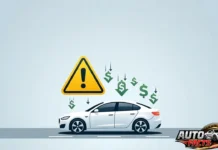
You’ve likely heard that a car loses value the moment you drive it home, but the scale is often underestimated. On average, a new vehicle loses 20% of its value within the first 12 months. By year three, many mainstream models depreciate by 50% to 60%.
Practical Tip: If you are concerned about resale value, research “residual value” rankings before buying. Brands like Toyota and Honda typically retain value better than luxury European counterparts, which can see steeper drops due to higher car maintenance costs out of warranty.
2. Financing: Your Credit Score is a Currency
In 2026, the gap between “good” and “bad” credit can result in a $10,000 difference in total interest paid. Buyers with a credit score above 780 can secure auto loans with APRs as low as 5.29%, while those in the subprime category (below 600) may face rates exceeding 18%.
Real-World Example: On a $40,000 loan, the difference between a 5% and 15% interest rate over 60 months is roughly $11,500 in interest alone. Always get pre-approved by a credit union before visiting a dealer.
3. The True Cost of Ownership Goes Beyond the Monthly Payment
Many buyers fall into the “payment trap,” only considering if they can afford the monthly check to the bank. However, the luxury SUV cost of ownership or even a standard sedan includes fuel, insurance, registration, and maintenance. According to AAA, the average cost to own and operate a new vehicle in 2026 is now over $12,000 per year.
4. Insurance Premiums Vary Wildly by Model
Before signing a sales contract, call your insurance agent. Two cars with the same purchase price can have vastly different car insurance premiums. Factors like the cost of replacement parts, safety ratings, and even “theft appeal” play a role.
- High Cost: Electric vehicles and high-performance sports cars.
- Low Cost: Mid-sized sedans and family-oriented crossovers with high safety scores.
5. Electric vs. Gas: The Maintenance Divide
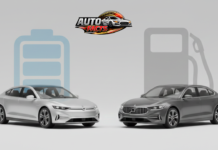
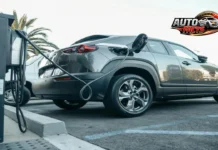
While the upfront EV cost of ownership is often higher (averaging $59,000 vs. $48,000 for gas), the long-term maintenance is significantly lower. EVs have roughly 20 moving parts in their drivetrain compared to 2,000 in an internal combustion engine (ICE).
Fact: Consumer Reports data suggests EV owners spend about 50% less on car maintenance and repairs over the vehicle’s life because they skip oil changes, spark plugs, and timing belt replacements.
6. “Certified Pre-Owned” (CPO) is the Middle Ground
If you want the peace of mind of a new car warranty without the 20% depreciation hit, CPO vehicles are the sweet spot. These are used cars that have undergone a rigorous inspection and come with an extended manufacturer warranty. They are often lease-returns that are only 2–3 years old.
7. The “Sales Tax” and “Documentation Fee” Surprise
The sticker price is never the final price. Depending on your state, sales tax can add 6% to 10% to the total. Furthermore, “Doc Fees” are charged by dealers to process paperwork. While some states cap these at $100, others allow dealers to charge upwards of $800.
8. Fuel Economy: The $10,000 Difference
Over 100,000 miles, a car that gets 20 MPG will cost you nearly $10,000 more in fuel than one that gets 40 MPG (assuming $3.75 per gallon). In 2026, hybrid vs electric comparisons show that hybrids are currently the most cost-effective for high-mileage drivers who lack home charging.
9. Modern Safety Features Can Lower Your Costs
Vehicles equipped with Advanced Driver Assistance Systems (ADAS), such as automatic emergency braking and lane-keep assist, are not just safer—they are becoming a requirement for the best insurance tiers. In 2026, look for “Level 2” autonomy features to future-proof your vehicle’s resale value.
10. The 20/4/10 Rule for Smart Buying
To avoid becoming “car poor,” financial experts recommend the 20/4/10 rule:
- 20%: Put at least 20% down to avoid “negative equity” (owing more than the car is worth).
- 4 Years: Don’t finance for longer than 48 months.
- 10%: Your total monthly car expenses (payment, insurance, fuel) should not exceed 10% of your gross income.
11. Extended Warranties: Read the Fine Print
Dealers make a significant profit on extended warranties. Before buying one, check the manufacturer’s powertrain warranty. Many cars already come with 5-year/60,000-mile or even 10-year/100,000-mile (Hyundai/Kia) protection. If you do buy an extended warranty, ensure it is backed by the manufacturer, not a third party.
12. Tires Are the Most Overlooked Maintenance Cost
As vehicles get heavier (especially EVs) and wheel sizes get larger, the cost of tires has skyrocketed. A set of 20-inch tires for a modern SUV can cost $1,200 to $1,600 and may only last 30,000 miles. Always check the tire tread and replacement costs during your used car inspection.
Frequently Asked Questions (FAQ)
1. Is it better to lease or buy a car in 2026?
Leasing is ideal if you want a new car every 3 years and low monthly payments. However, buying is better for long-term wealth building, as you eventually eliminate the payment and own an asset.
2. How can I avoid “negative equity”?
Negative equity occurs when you owe more than the car’s market value. Avoid it by making a larger down payment (at least 20%) and avoiding 72-month or 84-month loan terms.
3. What is the best month to buy a car?
Historically, December is the best month as dealers try to hit year-end quotas. Late 2025 and early 2026 have also seen increased incentives as inventory levels return to normal.
4. Are used car prices dropping in 2026?
Yes, used car prices have stabilized compared to the 2022-2024 peak. However, high-demand hybrid vs electric models still command a premium.
5. How much should I set aside for car repairs annually?
For a car out of warranty, a good rule of thumb is to save $100 per month ($1,200/year) into a dedicated “car fund” to cover tires, brakes, and unexpected mechanical issues.
Conclusion: Your Pre-Buying Checklist
Before you sign on the dotted line, run through this final checklist to ensure you are getting a deal that makes financial sense:
- Check your credit score and get a pre-approved loan.
- Calculate the “All-In” monthly cost (Payment + Insurance + Fuel).
- Compare the fuel economy and maintenance costs of your top 3 choices.
- Get an insurance quote for the specific VIN you are looking at.
- Perform a used car inspection if not buying new.
Knowledge is power in the automotive world. By understanding these car facts, you transition from a “lead” to a “buyer,” putting you in the driver’s seat of the negotiation. For more deep dives into specific models, check out our guide on
the longest range EVs of 2026
or our analysis ofluxury SUV cost of ownership
.Ready to start your journey? Begin by calculating your budget using the 20/4/10 rule and stay informed on the latest market trends.