
7 Car Insurance Mistakes That Can Cost You Thousands
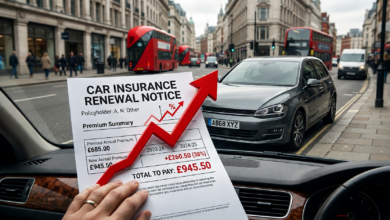
You might think you’re a savvy consumer, but when it came time to renew your policy, did you actually read the fine print? According to recent industry data, the average driver in Tier 1 countries like the USA and Canada could save over $500 annually simply by avoiding basic procurement errors. Yet, millions of motorists continue to settle for the first auto insurance premium they are offered, effectively leaving thousands of dollars on the table over the life of their vehicle ownership.
The world of insurance is designed to be complex. Between jargon like comprehensive and collision insurance and the legal intricacies of SR-22 insurance, it is easy to make a wrong turn. These aren’t just minor clerical errors; they are high-stakes financial blunders that can lead to claim denials or skyrocketing rates. In this deep dive for Auto Facts, we explore the seven most critical car insurance mistakes that are currently draining your bank account.
1. Choosing the Wrong Deductible Balance
One of the most frequent car insurance mistakes involves a fundamental misunderstanding of the deductible-to-premium relationship. A deductible is the amount you pay out-of-pocket before your insurance kicks in. Many drivers opt for a low deductible—say $250—because they fear a sudden expense after an accident. However, this “safety net” comes at a massive cost in the form of a significantly higher auto insurance premium.
When you choose a low deductible, the insurance company assumes more of the financial risk, and they charge you a monthly “convenience fee” for that risk. Conversely, raising your deductible to $1,000 can often reduce your premium by 15% to 30%. For a driver paying $2,000 a year, that’s a $600 saving. If you go three years without an accident, you’ve saved $1,800—more than enough to cover the higher deductible if you eventually do have a claim.
The mistake isn’t just picking a low deductible; it’s picking a deductible you haven’t saved for. The “pro move” is to raise your deductible to lower your monthly costs, then take those savings and put them into a dedicated emergency savings account. This way, you benefit from cheap car insurance rates while still being protected.
2. Misunderstanding Full Coverage vs. Liability Insurance
The debate between full coverage vs liability insurance is where many drivers lose the most money. Liability insurance is the legal minimum required to drive; it pays for damage you cause to others. Full coverage typically adds comprehensive and collision insurance, which protects your own vehicle regardless of fault.
The mistake occurs at two ends of the spectrum. First, owners of older vehicles often pay for “full coverage” on a car that is worth less than the annual premium and the deductible combined. If your car is worth $2,000 and your annual premium for collision is $600 with a $1,000 deductible, you are essentially paying for a benefit you can never fully claim. In the event of a total loss, the insurer will only pay the actual cash value minus your deductible.
On the other hand, owners of new or financed cars often skip vital protections like Gap Insurance. If you total a financed car and the insurance payout is less than what you owe the bank, you are stuck paying for a “ghost car.” Understanding exactly where your car sits on the value curve is essential for balancing car insurance costs.
3. Failing to Shop Around Regularly
Loyalty is a virtue in many areas of life, but in the insurance industry, it is often a “loyalty tax.” Many providers use a technique called “price optimization.” This algorithm identifies customers who are unlikely to switch providers and incrementally raises their auto insurance premium every renewal cycle, even if they haven’t had an accident.
If you haven’t compared car insurance quotes in the last 12 months, you are almost certainly overpaying. The market is incredibly volatile; a company that was the most expensive for you two years ago might have changed its underwriting criteria and could now offer you the cheap car insurance you’ve been looking for. This is especially true if you have moved, changed jobs, or seen an improvement in your credit score.
In Tier 1 markets, the competition is fierce. New digital-first insurers are constantly entering the space with lower overhead costs, passing those savings on to consumers. By shopping around once a year, you ensure that you are always paying the market rate rather than a legacy rate based on outdated data.
4. Neglecting the Impact of Credit Scores
In the United States and parts of Canada, your credit-based insurance score is often as influential as your driving record. A common mistake is assuming that car insurance mistakes only happen on the road. In reality, a drop in your credit score can cause your premium to spike by 50% or more.
Insurers have found a statistical correlation between credit health and claim frequency. To them, a driver with a lower credit score is a higher risk. Many drivers ignore this, failing to realize that by cleaning up a few errors on their credit report, they could qualify for a much better “tier” of insurance pricing. If you are struggling with high car insurance costs, your first step shouldn’t just be looking at your driving habits, but looking at your financial habits.
Note: Some regions, like California, Hawaii, and Massachusetts, prohibit the use of credit scores in insurance pricing. However, for the majority of drivers in the USA and UK, this remains a hidden factor that can cost thousands over time if left unmanaged.
5. Missing Out on Bundling and Discounts
Insurance companies love “sticky” customers—those who have multiple policies with them. A massive mistake is split-faring your insurance, such as having your home insurance with Company A and your auto insurance with Company B. By bundling these, you can often trigger a “multi-policy discount” of 10% to 25% across both premiums.
Beyond bundling, there are dozens of “invisible” discounts that drivers fail to claim. These include:
- Professional/Alumni Discounts: Discounts for being a teacher, engineer, or graduate of a specific university.
- Safety Feature Discounts: Having telematics, anti-theft devices, or even certain driver-assistance systems.
- Low Mileage Discounts: If you’ve shifted to a remote work model, you are driving fewer miles and represent a lower risk.
6. Not Accounting for “SR-22” or High-Risk Status
If you have a major violation like a DUI or multiple speeding tickets, you may be required to file an SR-22 insurance form. The mistake many make is staying with their current “standard” insurer after such an event. Standard insurers often don’t want high-risk drivers and will “price them out” with astronomical rates.
In this scenario, the best move is to look for a specialized high-risk carrier. These companies specialize in SR-22 filings and offer more competitive rates for those rebuilding their driving records. Staying with a carrier that doesn’t want your business is a guaranteed way to pay thousands more than necessary while you wait for the violation to fall off your record (usually 3 to 5 years).
7. Ignoring Telematics and Modern Tracking
We live in the age of data, yet many drivers are hesitant to use telematics—the small devices or smartphone apps that track driving behavior. The mistake here is letting “privacy concerns” outweigh potential savings of 30% or more. If you are a safe driver who doesn’t speed or drive late at night, you are subsidizing the premiums of bad drivers by refusing to use telematics.
For those looking for cheap car insurance, usage-based insurance (UBI) is the future. It turns your actual behavior into your premium, rather than relying on demographic generalizations. If you drive 5,000 miles a year and follow the speed limit, why should you pay the same as someone driving 20,000 miles a year in heavy traffic? Ignoring this technology is a missed opportunity for massive savings.
Cost Impact: The Financial Weight of Your Mistakes
| Mistake | Estimated Annual Loss | 5-Year Total Cost |
|---|---|---|
| Low Deductible ($250 vs $1000) | $250 – $500 | $1,250 – $2,500 |
| Failing to Shop/Compare Quotes | $400 – $900 | $2,000 – $4,500 |
| Unnecessary Full Coverage | $300 – $600 | $1,500 – $3,000 |
| Missing Bundling Discounts | $200 – $400 | $1,000 – $2,000 |
| Poor Credit Rating Surcharge | $500 – $1,500 | $2,500 – $7,500 |
Real-Life Scenario: The $3,000 Oversight
Meet “John” from Chicago. John had been with the same insurer for 6 years. He lived in a safe neighborhood, had a clean record, and paid $180 a month for full coverage insurance on his 2018 sedan. He never checked other car insurance quotes because he liked his local agent.
When John finally decided to compare rates, he discovered three things: 1) His car’s value had dropped so much that comprehensive and collision insurance was no longer cost-effective. 2) He was eligible for a professional discount as a nurse. 3) A rival company offered a 20% discount for his new home security system.
By correcting these car insurance mistakes, John’s premium dropped from $180 to $95 a month. He had been overpaying by $1,020 every year. Over three years, that simple oversight cost him over $3,000.
Tips to Avoid Costly Insurance Errors
- The 12-Month Rule: Set a calendar reminder to shop for car insurance quotes every 12 months without fail.
- Emergency Fund First: Only raise your deductible once you have that amount sitting in a savings account.
- Audit Your Policy: Read your “Declarations Page” annually to ensure all discounts (low mileage, safety features) are applied.
- Check Your Credit: Use free tools to monitor your credit score; a higher score equals a lower auto insurance premium.
- Ask About “Telematics”: Ask your agent if a “Safe Driver” app can lower your specific car insurance costs.
Conclusion
Your car insurance shouldn’t be a “set it and forget it” expense. From misunderstanding the nuances of full coverage vs liability insurance to falling victim to the “loyalty tax,” these car insurance mistakes are entirely preventable. By being proactive, comparing car insurance quotes, and understanding the factors that drive your auto insurance premium, you can reclaim thousands of dollars over your driving career.
Don’t wait for your next renewal. Start by auditing your current policy today. Are you paying for coverage you don’t need? Are you missing out on easy discounts? The road to cheap car insurance starts with education.
Stop Overpaying for Auto Insurance
The average driver saves hundreds by switching. Take 5 minutes to compare the latest car insurance quotes and find the best full coverage for your budget.
FAQ
Is liability insurance enough for an old car?
Generally, if the annual cost of comprehensive and collision insurance exceeds 10% of your car’s total value, it might be time to switch to liability-only to save on car insurance costs.
Will my premium go up if I just ask for a quote elsewhere?
No. Checking car insurance quotes involves a “soft pull” on your credit (where applicable), which does not affect your credit score or your current auto insurance premium.
What is the difference between comprehensive and collision?
Collision insurance covers accidents involving other vehicles or objects. Comprehensive insurance covers “acts of God” like theft, fire, hail, or hitting an animal.
Does SR-22 insurance always stay on your record?
No. Typically, an SR-22 insurance requirement lasts for 3 years. Once the period is over, you must notify your insurer to remove the filing to lower your rates.
Can I change my car insurance at any time?
Yes, you can switch providers at any time. You do not have to wait for your policy to expire, and you are usually entitled to a pro-rated refund of your unused auto insurance premium.