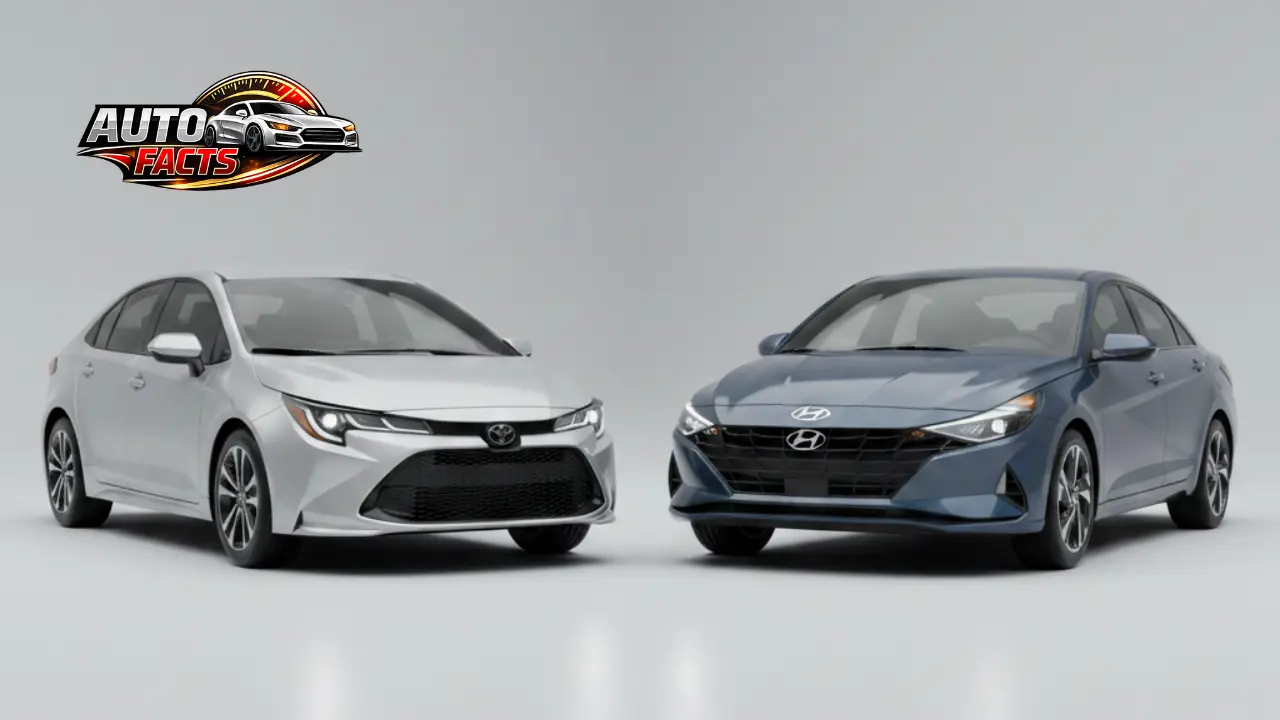
Toyota Corolla vs Hyundai Elantra 2026 | Which One Is Better?
For decades, the battle for the top spot in the compact sedan market has been a fierce rivalry between Japan and South Korea. In 2026, the stakes are higher than ever. With the average price of new vehicles climbing, many drivers in the USA and Europe are turning back to affordable cars 2026 that prioritize efficiency without sacrificing modern luxury. The 2026 Toyota Corolla and the 2026 Hyundai Elantra represent the pinnacle of this segment, offering a blend of reliability, advanced technology, and low cost of ownership.
Choosing between these two compact cars is no longer just about brand loyalty. Modern buyers are more analytical, calculating the car insurance cost, long-term depreciation, and maintenance cost before signing a contract. In this comprehensive comparison, we will dive deep into every aspect of these two titans to determine which one deserves your hard-earned money in 2026.
Quick Comparison Table: 2026 Models
| Feature | 2026 Toyota Corolla | 2026 Hyundai Elantra |
| Starting Price (Est.) | $23,500 | $22,900 |
| Engine | 2.0L 4-Cylinder / Hybrid | 2.0L 4-Cylinder / Hybrid |
| Horsepower | 169 hp | 147 hp |
| Max Fuel Economy | 50 MPG (Hybrid) | 54 MPG (Hybrid) |
| Standard Warranty | 3-yr/36,000-mi | 5-yr/60,000-mi |
Price and Trim Levels Comparison
When searching for cheap cars that don’t feel “cheap,” the price tag is the first hurdle. For 2026, both brands have managed to keep prices competitive despite inflationary pressures.
Toyota Corolla Trims
The Corolla maintains a straightforward lineup: LE, SE, and XSE. The LE remains the high-volume value leader, offering a robust set of standard features. The SE adds sportier styling and 18-inch wheels, while the XSE serves as the premium choice with SofTex-trimmed seats and a sunroof. Toyota also continues to offer the Hybrid powertrain across multiple trims, including an All-Wheel Drive (AWD) option—a major selling point for those in colder climates.
Hyundai Elantra Trims
The Elantra offers slightly more variety with the SE, SEL Sport, Limited, and the performance-oriented N Line. Historically, the Elantra SE has a lower entry price than the Corolla, making it a favorite for those strictly focused on the lowest initial cost of ownership. The Limited trim provides a near-luxury experience with high-tech features that often surpass the Corolla’s top-tier offerings.
Performance and Engine Options
Performance in the compact cars segment isn’t just about speed; it is about how the car handles daily life. The 2026 Toyota Corolla comes standard with a 2.0-liter Dynamic Force engine. It delivers 169 horsepower, which provides a surprisingly peppy feel for highway merging. Toyota utilizes a “Physical First Gear” CVT, which avoids the rubber-band sensation found in older CVTs, providing a more natural driving experience.
The 2026 Hyundai Elantra’s base 2.0-liter engine produces 147 horsepower. While it feels slightly less urgent than the Corolla, the Elantra’s Smartstream IVT is tuned for smoothness and maximum fuel economy. For those who want more “punch,” the Elantra N Line offers a turbocharged 1.6-liter engine producing over 200 horsepower—a performance level that the standard Corolla cannot match unless you step up to the niche GR Corolla hatchback.
Fuel Economy Comparison
In 2026, fuel economy remains a top priority for commuters in both the USA and Europe. Both vehicles are masters of the gasoline-sipping arts. The standard gasoline Corolla averages around 35 MPG combined, while the base Elantra mirrors that figure almost exactly.
However, the real competition lies in the hybrids. The 2026 Hyundai Elantra Hybrid “Blue” trim is a fuel-efficiency champion, rated at up to 54 MPG combined. The Toyota Corolla Hybrid typically hovers around 50 MPG. While the Elantra wins the numbers game, the Corolla is the only one in the pair to offer an Electronic On-Demand All-Wheel Drive system in its hybrid version, which slightly lowers its MPG but adds significant utility.
Interior, Comfort, and Technology
Stepping inside these cars reveals two very different design philosophies. The 2026 Toyota Corolla focuses on reliability and ergonomics. The materials are built to last a decade, and the layout is intuitive. The 2026 model features an upgraded 10.5-inch Toyota Multimedia System with wireless Apple CarPlay and Android Auto. It is a “get in and drive” kind of car with minimal learning curve.
The 2026 Hyundai Elantra, by contrast, feels like a futuristic cockpit. Higher trims feature dual 10.25-inch integrated displays that curve toward the driver. The ambient lighting and sleek dashboard design give the Elantra a “premium” vibe that punches far above its weight class. Furthermore, the Elantra offers significantly more rear-seat legroom than the Corolla, making it the better choice for those who frequently transport adult passengers.
Safety Features and Crash Test Ratings
Both vehicles are perennial “Top Safety Pick” winners. In 2026, Toyota Safety Sense 3.0 comes standard on all Corollas. This suite includes Pre-Collision Systems with Pedestrian Detection, Lane Departure Alert, and Proactive Driving Assist, which uses the car’s camera and radar to provide gentle braking into curves. Toyota’s system is highly regarded for its smooth, non-intrusive interventions.
Hyundai SmartSense is equally impressive. It offers Forward Collision-Avoidance Assist, Blind-Spot Collision Warning, and a very helpful Safe Exit Warning, which prevents passengers from opening doors into approaching traffic. In 2026, Hyundai has improved its Highway Driving Assist, which keeps the car centered in its lane with more precision than previous iterations. Both cars provide 10 airbags as standard, ensuring maximum protection in the event of an accident.
Maintenance, Reliability, and Warranty
This is where the financial decision often becomes clear. When you evaluate the maintenance cost of a car over five to ten years, the warranty plays a massive role.
The Hyundai Advantage: Hyundai remains the leader with its “America’s Best Warranty.” It includes a 10-year/100,000-mile powertrain warranty and a 5-year/60,000-mile limited warranty. Additionally, Hyundai provides 3 years or 36,000 miles of complimentary scheduled maintenance. For someone looking at a lease vs buy scenario, the long warranty makes buying an Elantra a very safe long-term play.
The Toyota Advantage: While Toyota’s warranty is shorter (5-year/60,000-mile powertrain), the Corolla’s reliability ratings are legendary. History shows that a Corolla is one of the most likely cars to reach 200,000 miles with minimal repairs. Toyota also includes “ToyotaCare,” which covers factory-scheduled maintenance for 2 years or 25,000 miles. Many buyers choose the Corolla because the resale value stays high even after the warranty expires.
Cost of Ownership Breakdown
To determine which is the best budget sedan, we must look at the total financial picture over a five-year period.
- Car Insurance Cost: Generally, the Corolla is slightly cheaper to insure in most US states. However, auto insurance rates for the Elantra have stabilized in 2026 following the implementation of advanced anti-theft software across all trims.
- Depreciation: The Toyota Corolla is the gold standard for resale value. It typically retains about 7-10% more of its value after five years compared to the Elantra. This means that while you might pay more upfront for the Corolla, you get more back when you sell it.
- Fuel and Maintenance: If you drive 15,000 miles per year, the fuel costs are nearly identical for the gas versions. The Elantra Hybrid saves a few hundred dollars more per year in gas, but the Corolla’s lower repair frequency often balances the scales.
Pros and Cons of Toyota Corolla
Pros
- Unbeatable resale value and long-term durability.
- Standard Toyota Safety Sense 3.0 is exceptionally refined.
- Available All-Wheel Drive (AWD) on Hybrid models.
- Simplified trim levels make it easy to shop.
Cons
- Rear-seat legroom is tight for tall passengers.
- Trunk space is smaller than the Elantra (13.1 cu ft).
- Infotainment is functional but lacks the “wow” factor of Hyundai.
Pros and Cons of Hyundai Elantra
Pros
- The 10-year/100,000-mile warranty provides ultimate peace of mind.
- Superior interior technology and larger screen displays.
- Best-in-class fuel economy for the Hybrid Blue model (54 MPG).
- More spacious cabin and larger trunk (14.2 cu ft).
Cons
- Higher depreciation than the Toyota.
- Base engine (147 hp) feels a bit sluggish on steep inclines.
- Design styling is aggressive and may not appeal to all buyers.
Which Car Is Better for Different Buyers?
For Commuters
The Toyota Corolla Hybrid AWD is the winner here. If your commute involves highway miles and varying weather conditions, the added stability of AWD and the consistency of Toyota’s hybrid system make it a reliable partner for years.
For Students
The Hyundai Elantra SE is the perfect choice for students looking for cheap cars. The lower entry price, combined with three years of free maintenance and a decade-long warranty, ensures that a student’s budget won’t be ruined by an unexpected mechanical failure.
For Families
The Hyundai Elantra takes the prize for families. The extra rear legroom and larger trunk space are critical for fitting car seats and groceries. The safety features are top-notch, and the “Safe Exit Warning” is a literal lifesaver for parents with young children.
Final Verdict: Which One Is Better in 2026?
In the battle of Toyota Corolla vs Hyundai Elantra 2026, the winner depends on how you define “better.”
If “better” means a sound financial investment that will hold its value and run forever with minimal fuss, the Toyota Corolla is the winner. It is the safe, logical choice that rewards you with a high resale value at the end of your ownership journey.
If “better” means getting the most modern technology, the longest warranty, and the most comfortable interior for the lowest price today, the Hyundai Elantra is the winner. It provides a more exciting ownership experience and protects your wallet from major repairs for a full decade.
FAQ Section
Which car has a lower car insurance cost?
While auto insurance rates depend on the driver’s history, the Toyota Corolla typically has a slightly lower insurance premium due to its standardized safety parts and high safety ratings. Always compare quotes before purchasing.
Is it better to lease or buy a budget sedan in 2026?
The decision to lease vs buy depends on your habits. If you keep cars for 8+ years, buying the Corolla is the smart move. If you want a new car every 3 years with a low monthly payment, the Elantra often has more aggressive lease deals.
Which is more reliable, the Corolla or the Elantra?
Toyota generally has higher reliability ratings for long-term use (10+ years). However, the Elantra’s 10-year warranty means that for the first decade, the “reliability” risk is largely covered by the manufacturer.
Do these cars have All-Wheel Drive (AWD)?
The Toyota Corolla offers AWD on its Hybrid models. The Hyundai Elantra is currently Front-Wheel Drive only for the 2026 model year.
Which car is better for fuel economy?
The Hyundai Elantra Hybrid Blue wins with an estimated 54 MPG. The Toyota Corolla Hybrid is close behind with up to 50 MPG.
Conclusion
The 2026 Toyota Corolla and Hyundai Elantra prove that you do not need to spend a fortune to own a high-quality vehicle. Both models offer incredible fuel economy, top-tier safety, and a low cost of ownership. Whether you choose the legendary reliability of the Corolla or the high-tech value of the Elantra, you are getting one of the best affordable cars 2026 has to offer. Take the time to test drive both, as the “better” car is ultimately the one that feels right when you are behind the wheel.